Start with Iron. Aim through gaps, clear the lowest threats, and build around the rewards you actually earn. Guide and Help open in a new tab.
Block Smash: Survival
Preparing the playable web game inside WordPress…
Block Smash is a quick arcade survival game: aim with mouse or touch, clear blocks, choose upgrades, and keep the run alive as pressure rises.
Controls: mouse or touch. If the canvas does not appear, refresh once and report the route, browser, device, and whether this loading card appeared.
Designed, written, and tested by Diligesker Lab · Player guidance updated September 15, 2026 · Report a gameplay or documentation mismatch
How to play Block Smash: Survival
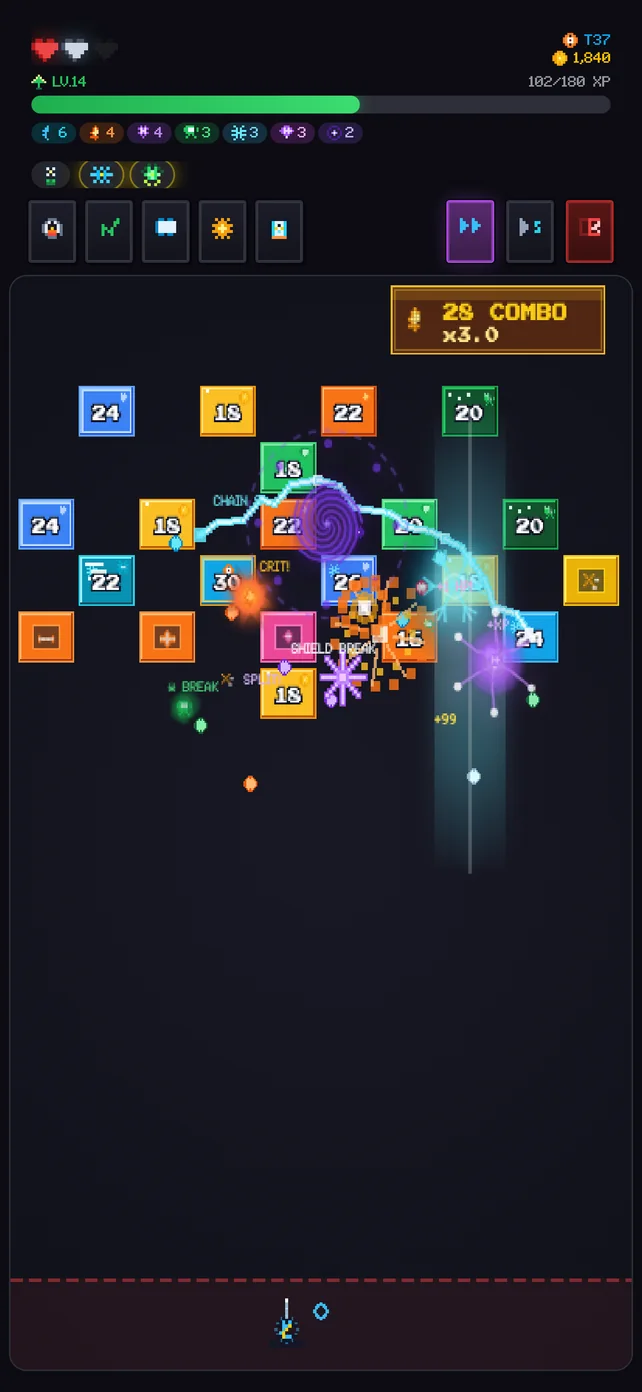
Block Smash: Survival combines an aimed brick-breaker shot with a run-based build. You choose the first launch angle, but the build determines what happens after the first collision: extra projectiles, elemental effects, chain reactions, relic triggers, and character rules can turn one rebound into a long cascade. The objective is to clear enough pressure each turn to keep blocks from overtaking the board.
Your first five decisions
- Start with Iron. A fresh save has Iron available. Blaze, Volt, Frost, Viper, and Fortuna unlock through later progress; the starter guide lists their conditions. Your first run is about learning a useful rebound path, not choosing among six unlocked characters.
- Aim for access. A narrow gap or a path above the front row usually creates more future collisions than a flat hit into the nearest block.
- Watch board pressure before damage totals. A spectacular combo can still leave a dangerous lane. The next shot should solve the board you actually have.
- Read rewards when they appear. Early shots do not guarantee a level-up: our fresh ten-shot opening ended at 40/150 XP with no reward choice. The game contains more than 60 relic effects and 18 ball types in the documented release. A rare-looking option is not automatically better than an effect that reinforces the current trigger pattern.
- Separate the run from permanent progress. Level-up choices shape the current attempt. Earned coins and meta-upgrades support later attempts, so a failed board can still provide information and progression.
Controls, saves, and browser behavior
| Area | What to expect |
|---|---|
| Aiming | Drag or point with a mouse, trackpad, or touch, then release to launch. If the visible aim line and launch position differ, report browser zoom and screen orientation. |
| Screen shape | The game uses a portrait playfield. On wide displays the canvas height is capped; on narrow devices it uses the available dynamic viewport height. |
| Local progress | Language, coins, unlocks, upgrades, and run records can be stored on the device through browser local storage. Clearing site data or using private browsing may remove them. |
| Account | No Diligesker account or sign-in is required for the public browser build. |
| Restart | When board pressure ends a run, use the game-over flow to review the result and begin another attempt. |
Keep your game open while reading
The Guide link above opens a separate tab so you can compare a clue or shot decision with the board. Return to this tab to continue. Do not refresh an unfinished attempt just to open a guide. Browser-local progress is not a cloud backup.
If the game does not start or aiming feels wrong
Refresh once and note the loading card’s final message. For a useful report, include this URL, browser and version, device, orientation, browser zoom, whether the loading card and canvas appeared, and the action immediately before the problem. The contact page explains the reporting format. You can also review the current systems and screenshots, compare Iron, Volt, and Frost starter builds, or use the first-ten-turn decision guide without launching a run.
Current-build limits
Block Smash is an actively maintained experimental browser game. Balance, boss pressure, lower-power-device performance, and touch comfort can change. Counts and behavior on this page describe the build checked on the review date above rather than a permanent promise. Visitor-visible changes belong in the public change log, and a mismatch between the game and this explanation should be reported for correction.