Sestet: Drawing a Fog-Covered World, One Tile at a Time
Sestet is a tile-placement game I am making. Its one-line pitch: draw a world hidden in fog, one tile at a time, while your neighbors reach for the same land. It is in development and not playable here yet. This note is a first look at how it feels.
Start with a capital and a lot of fog
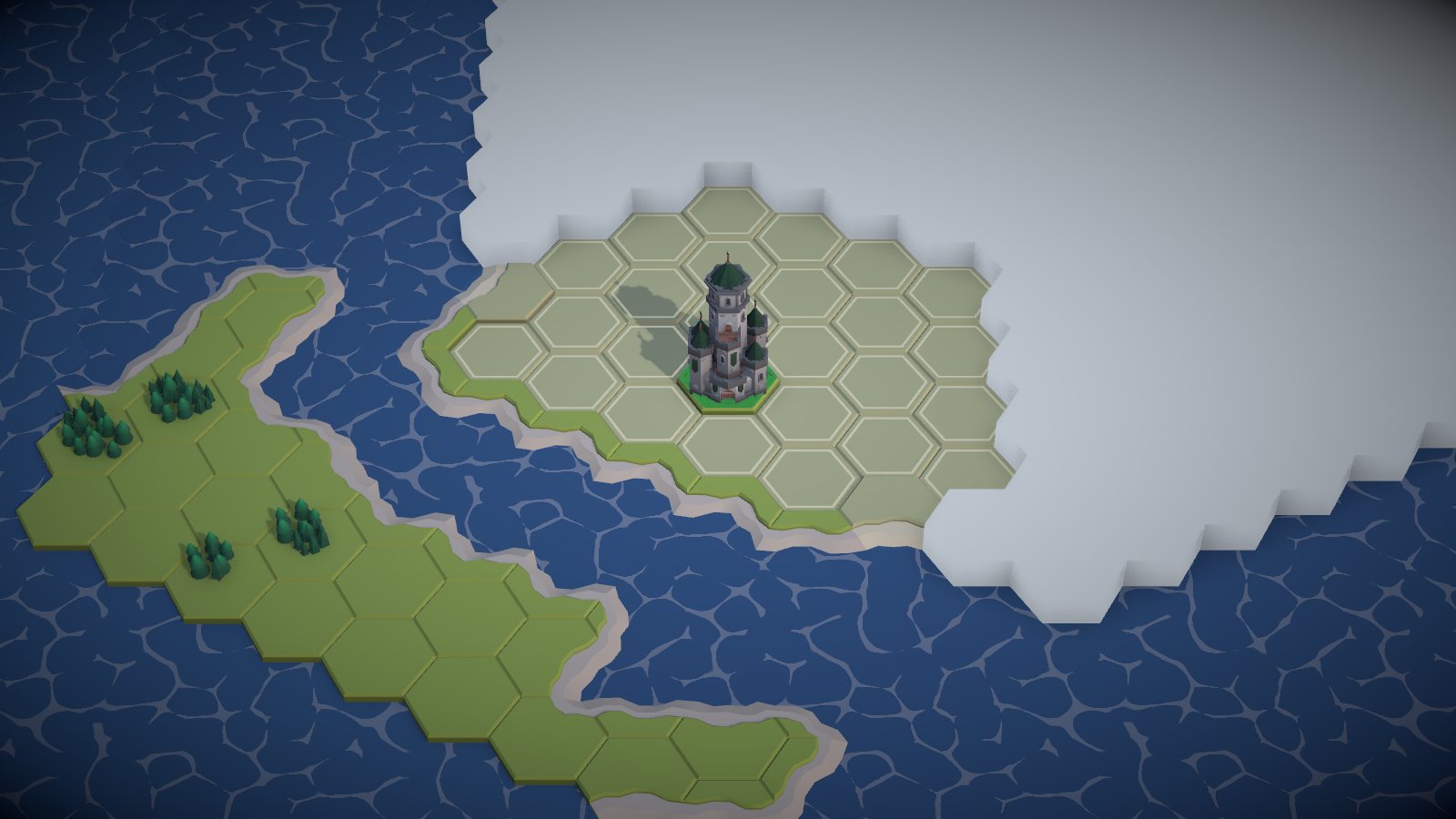
Every match begins with only your own capital in view. Each round you pick a hex tile and place it: fields, forest, a village, a road. Tiles reveal the land next to them, so building outward is also exploring. You never quite know what is behind the next edge of fog until you commit to going there.
Compete without fighting
Other civilizations are building on the same map, but nobody can destroy anyone else’s work. The competition is for shared places and connections: who reaches a neutral city first, who links up a route, who claims the good land before it is gone. It stays tense without turning into a fight.
End with a country you made
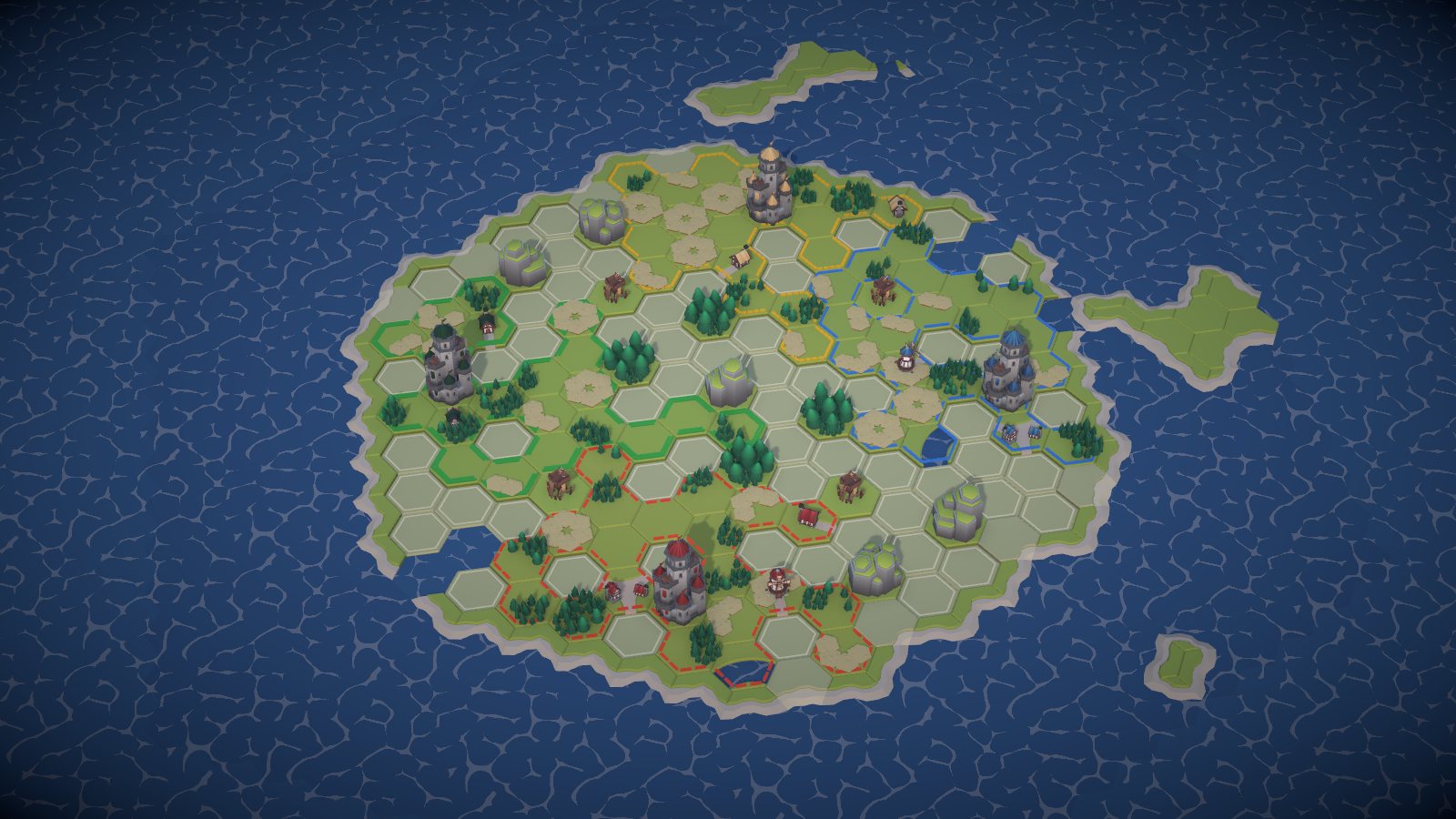
When a match ends, the result should be a place, not only a score. You can see your forests and villages, the roads you ran to the coast, and where your borders met someone else’s. Each game leaves you with a small country that looks like the decisions you made.
Short enough for one more game
Sestet is meant to be relaxed to play but close at the finish, and short enough that one more game is an easy decision. It is aimed at players who enjoy calm building games and light strategy board games, and at friends who want something to play together in a few minutes.
Where it is now
The rules are complete, and matches can be played in solo modes and against computer opponents while the design is tested. Presentation, tutorials and playing with other people come next. I will share more when there is something you can try.
The images are in-development captures and will change. Hex and building art is based on KayKit asset packs.