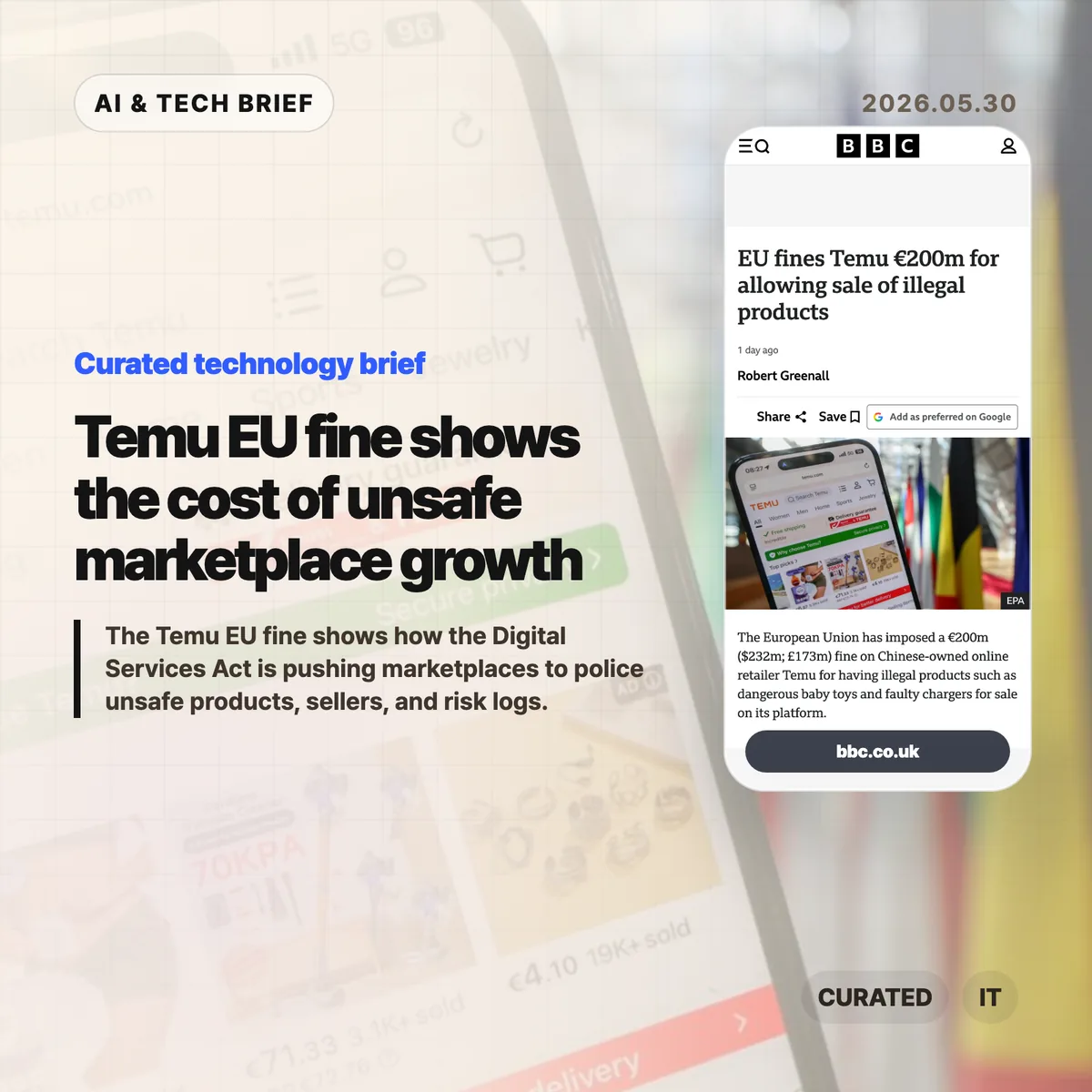
The Temu EU fine is a 200 million euro warning to marketplaces that scale cheap goods faster than their safety systems. The European Commission says Temu failed to assess the systemic risk of illegal products on its platform, including dangerous baby toys and faulty chargers. For builders, the lesson is blunt: marketplace trust is now an operations problem, not a footer policy.
Table of Contents
The short version
- The EU fined Temu 200 million euros after finding illegal and unsafe products for sale on its marketplace.
- Regulators tied the case to the Digital Services Act, which gives very large online platforms stronger risk management duties.
- Temu disagrees with the decision and says the finding reflects 2024 systems rather than its current controls.
- The practical pressure is on seller vetting, product testing, complaint handling, repeat-offender detection, and proof that those systems work.
What happened
The European Union fined Temu 200 million euros, about $232 million, after an investigation into illegal products available through the platform. According to BBC News, the European Commission said Temu had “failed to diligently identify, analyse and assess the systemic risks” created by products that could harm consumers.
The case involved an independent mystery-shopping exercise. Testers found that many chargers bought through Temu failed basic electrical safety checks. Baby toys also raised safety concerns, including chemicals above legal limits and small detachable parts that could create suffocation risks.
Temu has been under EU scrutiny since October 2024 as a designated Very Large Online Platform. The company said it disagrees with the decision, called the fine disproportionate, and argued that the case reflects older systems. It now has until August 28 to submit an action plan. The Commission will then decide whether the fixes are enough.
Why the Temu EU fine matters
The Temu EU fine matters because it treats unsafe goods as a platform risk, not a string of isolated seller mistakes. That is a different burden. A marketplace has to explain how it spots risky product categories, blocks repeat offenders, handles consumer reports, and prevents removed listings from returning under a new name.
That shift matters beyond Temu. Large shopping apps depend on automation: search ranking, recommendations, seller onboarding, reviews, advertising, and payment flows. If safety checks grow more slowly than the catalog, regulators can read the gap as a design failure.
There is also a discovery angle for app teams. A shopping app can win downloads through price and variety, but app-store reputation and regulator attention can turn fast if users associate the brand with dangerous goods. More coverage like this is tracked in the IT & AI archive, where platform policy is increasingly tied to product design.
Why this is worth watching
The Digital Services Act is often discussed through content moderation, election risks, and recommendation systems. This case pulls consumer product safety into the same operating model. That makes DSA compliance more concrete for marketplaces: it is about data pipelines, seller controls, escalation paths, and audit records.
The fine is also a signal to other high-volume marketplaces. If a platform’s core promise is extreme choice at low prices, the weak point is usually verification. Cheap listings are easy to add. It is much harder to prove that chargers, toys, cosmetics, and household goods were checked well enough before and after they reached consumers.
For regulators, the case offers a cleaner story than many platform disputes. Dangerous products are easier for the public to understand than opaque ranking systems. That makes this kind of enforcement politically useful, and likely to travel beyond the EU.
What the discussion is missing
There was no clear Hacker News thread available for this story at the time of writing. The missing debate is still useful to name.
The strongest marketplace argument would be about scale. Platforms like Temu host huge numbers of sellers and listings, and no review system catches every bad product before sale. The stronger consumer-safety reply is that scale is exactly why the platform needs better controls. If the business model depends on automated listing growth, the safety model has to be automated and testable too.
The technical question is where responsibility sits in the stack. Seller identity checks, product category risk scores, lab-test sampling, takedown queues, appeal systems, and re-listing detection are all separate systems. Regulators are now asking whether they add up to a credible safety program.
The practical read
Marketplace operators should treat the Temu EU fine as a checklist prompt. Can the team show which product categories are high risk? Can it prove how fast unsafe listings are removed? Can it detect a seller who reuploads the same product with a new title or image? Can customer support reports feed back into search and recommendation systems?
For founders, the uncomfortable part is cost. Safety workflows slow down supply growth and add review overhead. But once a marketplace reaches large-platform scale, weak controls become a liability that can erase the advantage of cheap acquisition.
For users, the case is a reminder that low prices do not answer the safety question. A marketplace can be convenient and still need stronger checks on the products it promotes.