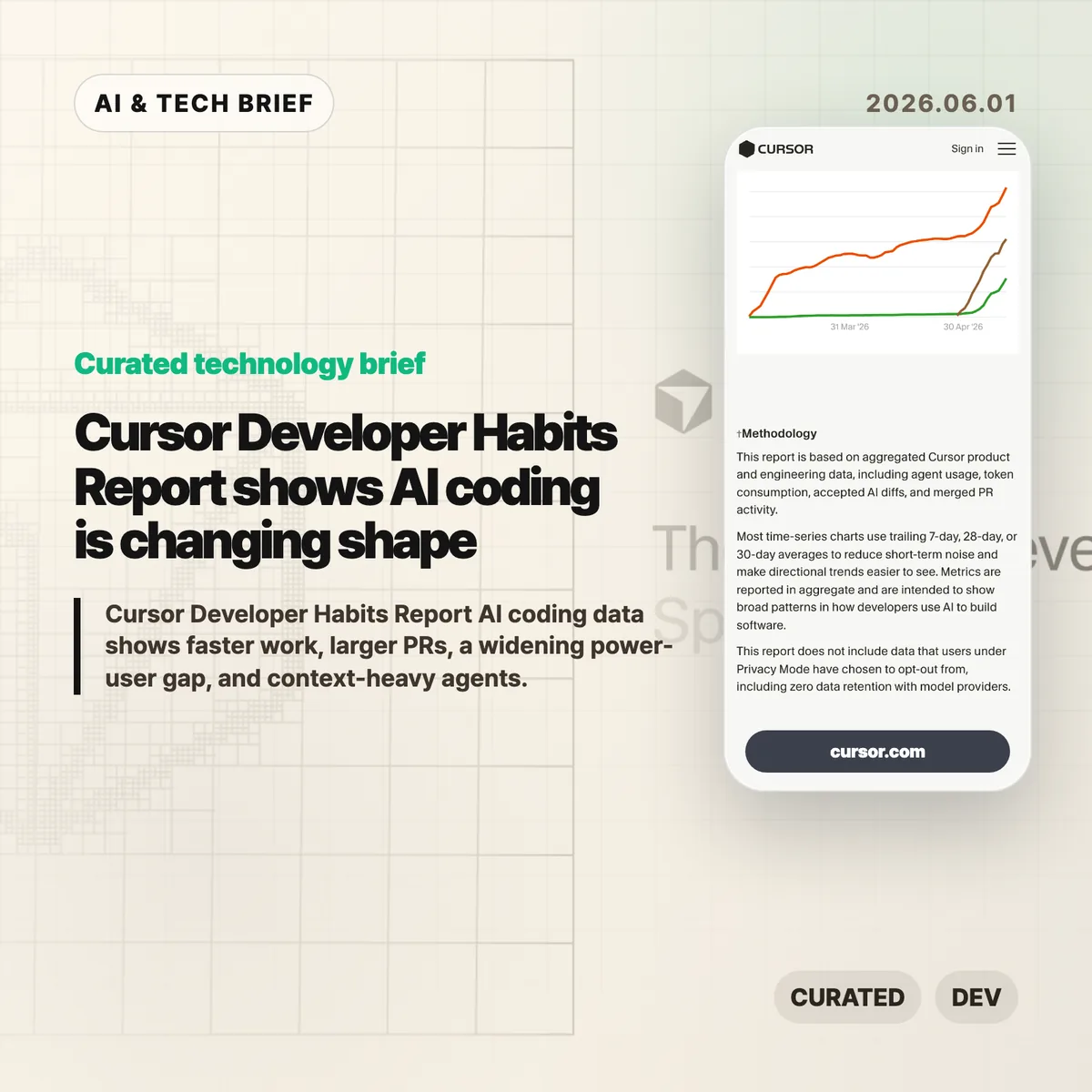
Source: The Cursor Developer Habits Report
Table of Contents
AI coding tools are no longer just making autocomplete feel smarter. Cursor’s Spring 2026 Developer Habits Report points to something messier: more code, larger PRs, deeper agent sessions, and a widening gap between casual users and people who have turned agents into a real workflow.
The short version
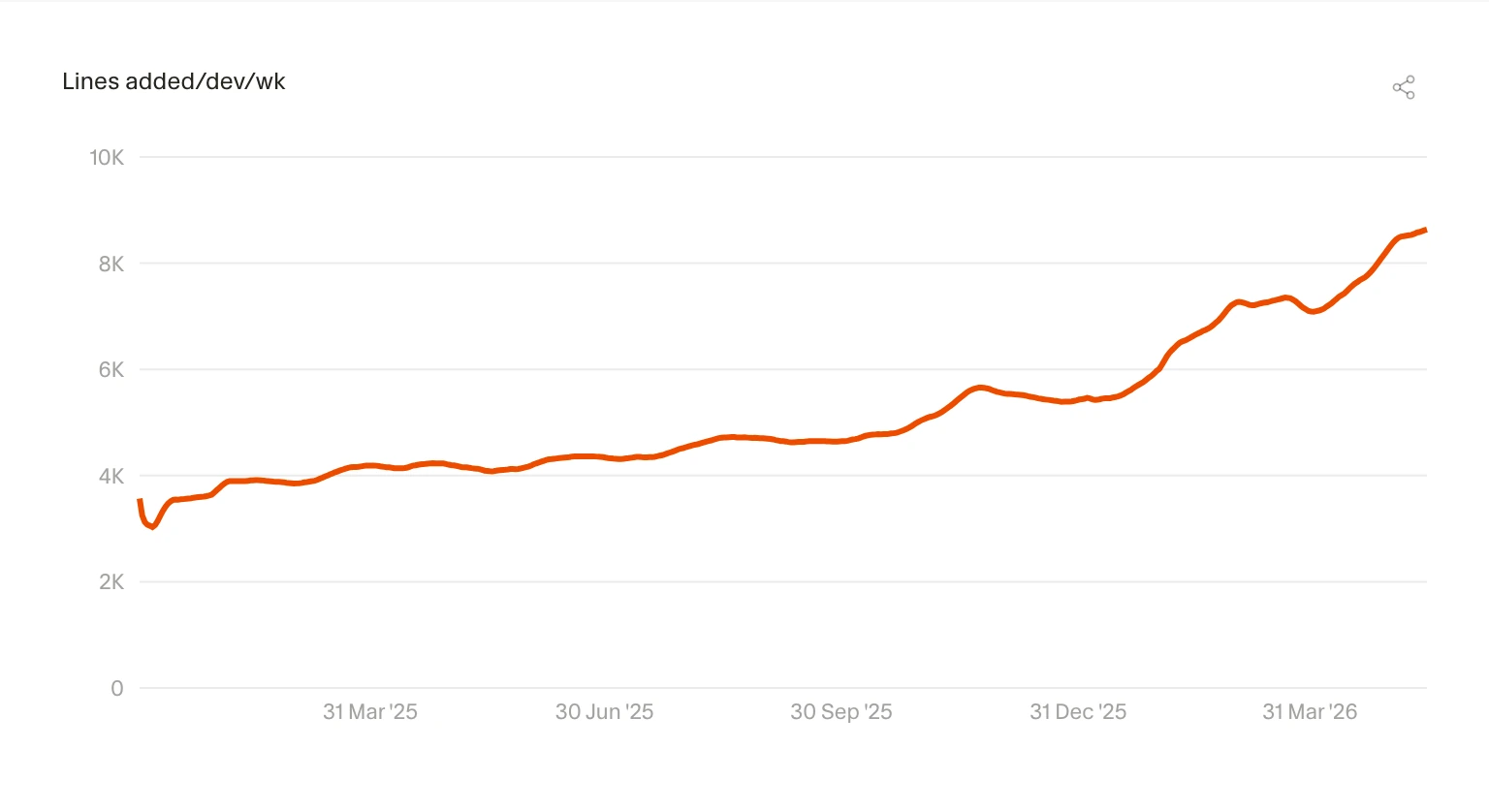
- The Cursor Developer Habits Report says lines added per developer per week rose from 3.6K in early 2025 to 8.6K by May 2026.
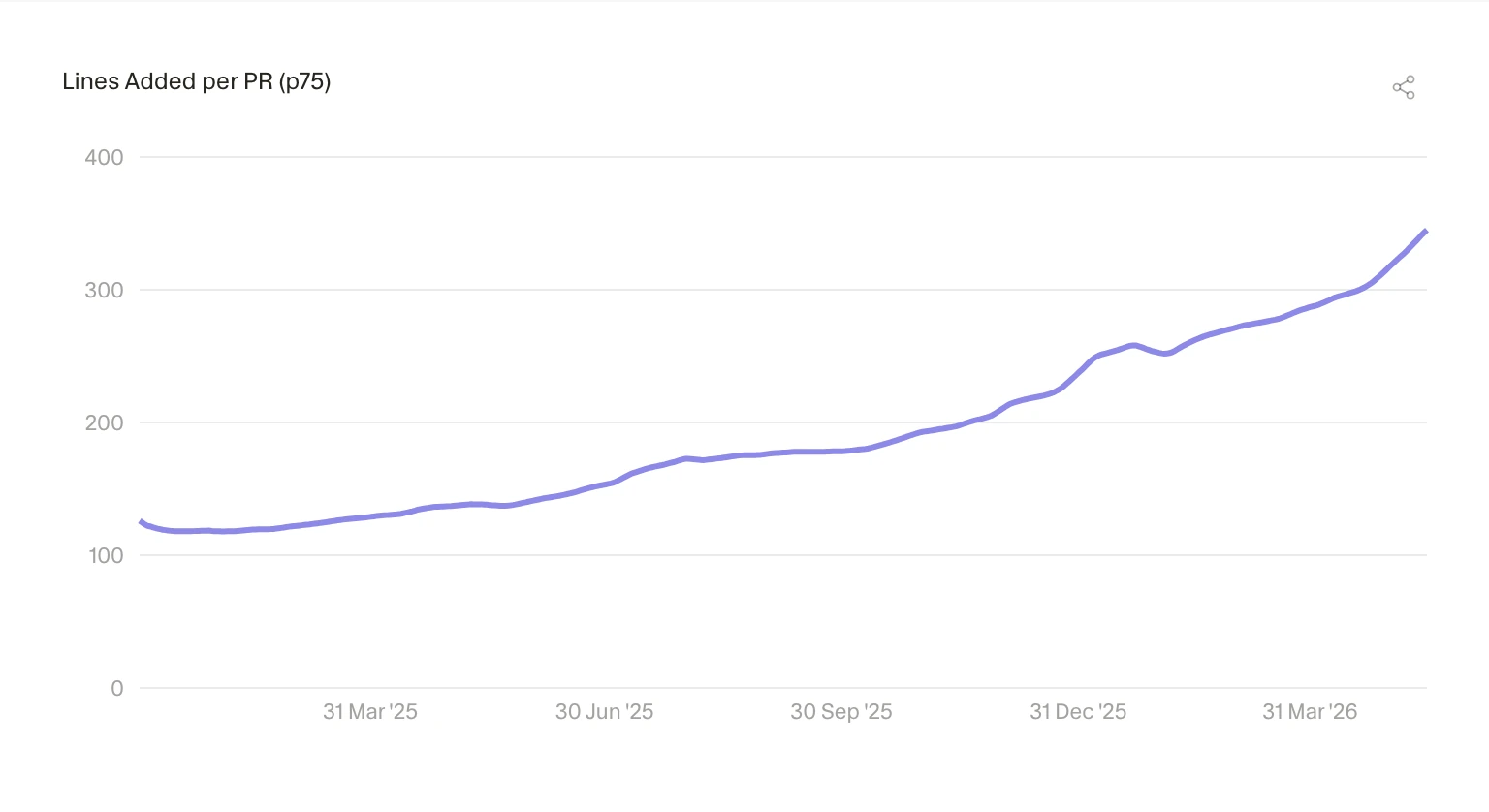
- PRs are getting much larger. The p75 lines added per PR moved from 125.86 to 345.02.
- Big PRs are less rare now: merged PRs with at least 1,000 changed lines rose from 8.0% to 13.8%.
- AI usage is concentrated. Cursor reports Gini scores of 0.77 for AI lines, 0.75 for AI spend, and 0.72 for token consumption.
- The input/output token ratio rose from 4.52× to 11.41×, which means agents are reading far more before they write.
What happened
Cursor published a product-data report on how developers are using AI inside its coding environment. The headline number is easy to understand: developers are adding more code. But the more useful signal is that the unit of work is getting bigger.
Lines added per developer per week rose from 3.6K to 8.6K. That is a big jump. It is also a dangerous number to overread. More lines can mean more output. They can also mean more churn, more review load, or more code that somebody has to clean up later.
Source: The Cursor Developer Habits Report
The PR data is harder to ignore. The p75 lines added per PR went from 125.86 to 345.02, and the share of merged PRs with at least 1,000 changed lines rose from 8.0% to 13.8%. That changes the reviewer’s job. A larger diff needs a clearer intent, better tests, and a smaller blast radius.
Source: The Cursor Developer Habits Report
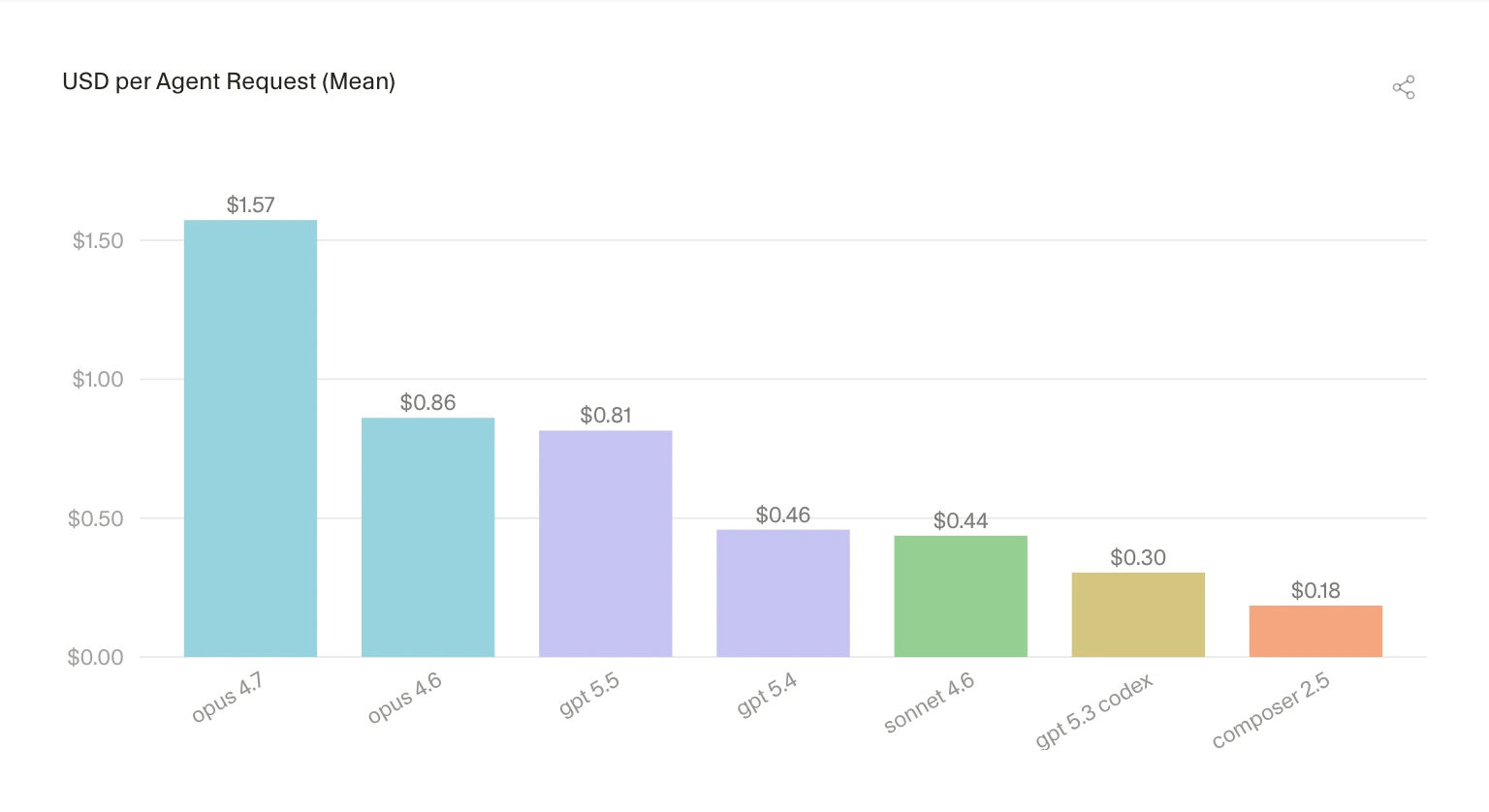
Cost is part of the story too. Cursor shows average agent request cost varying from $1.57 for opus 4.7 to $0.18 for composer 2.5. The gap gets narrower when measured by accepted added line, but it does not go away. Model choice now affects product quality and margins at the same time.
Source: The Cursor Developer Habits Report
Why this is worth watching
The Cursor Developer Habits Report is useful because it shows the awkward middle stage of AI coding. The tools are good enough to change how people work, but not clean enough to remove the need for discipline.
Bigger PRs are not automatically better. Deeper agent sessions are not automatically safer. Cursor also reports that the 60-minute survival share for accepted AI lines rose from roughly 76% to 81%, which is a decent signal. But a line surviving for an hour is not the same as a line staying cheap to maintain for six months.
The power-user gap may be the most important part. If the top users learn how to scope work, feed context, inspect diffs, and run checks, their curve bends faster than everyone else’s. Buying the tool does not spread that skill evenly across a team.
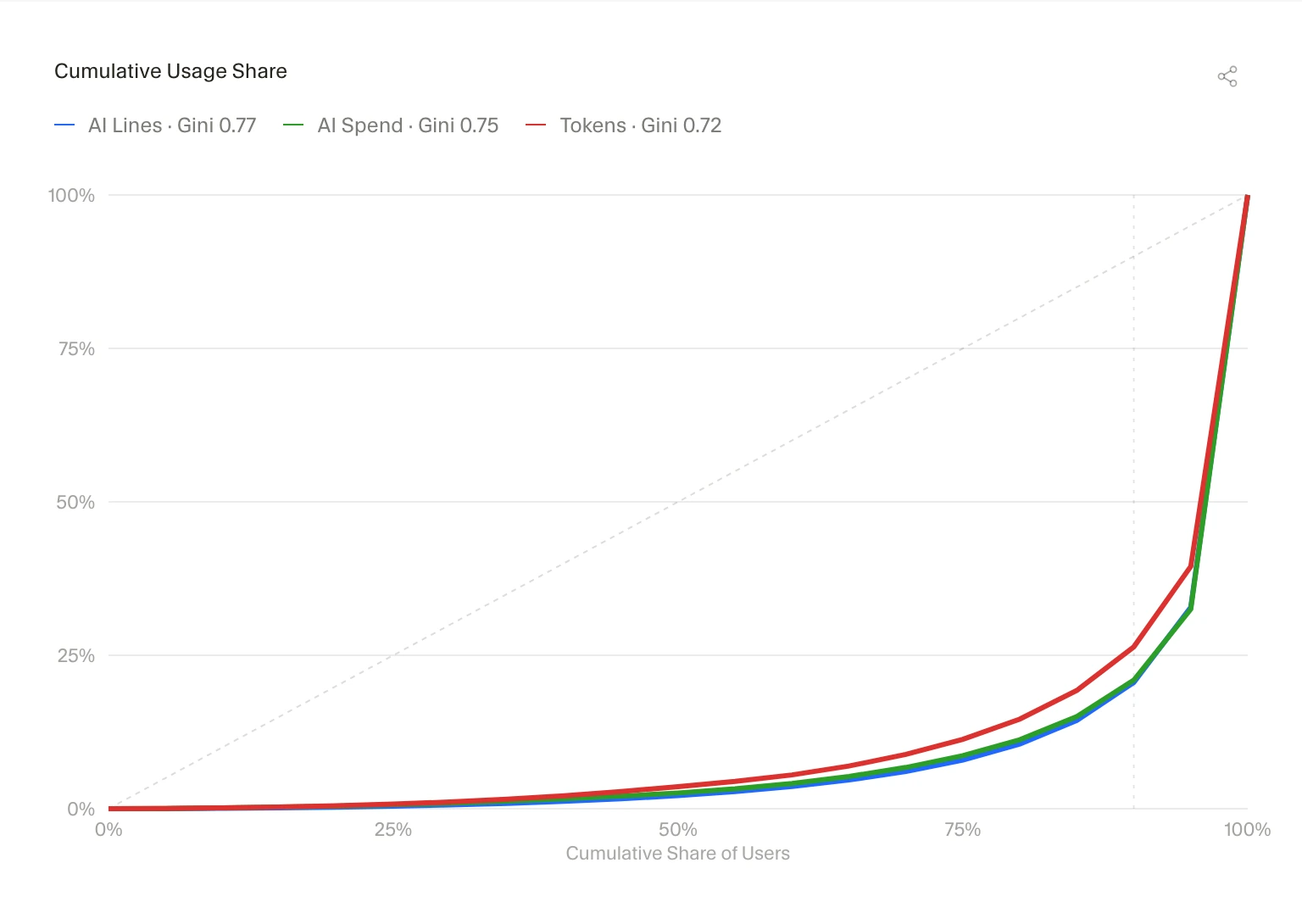
Source: The Cursor Developer Habits Report
AI coding notes for builders
For developer-tool teams, the context numbers are the part to stare at. The input/output token ratio climbed above 11×. That suggests the agent experience is becoming a reading problem as much as a writing problem.
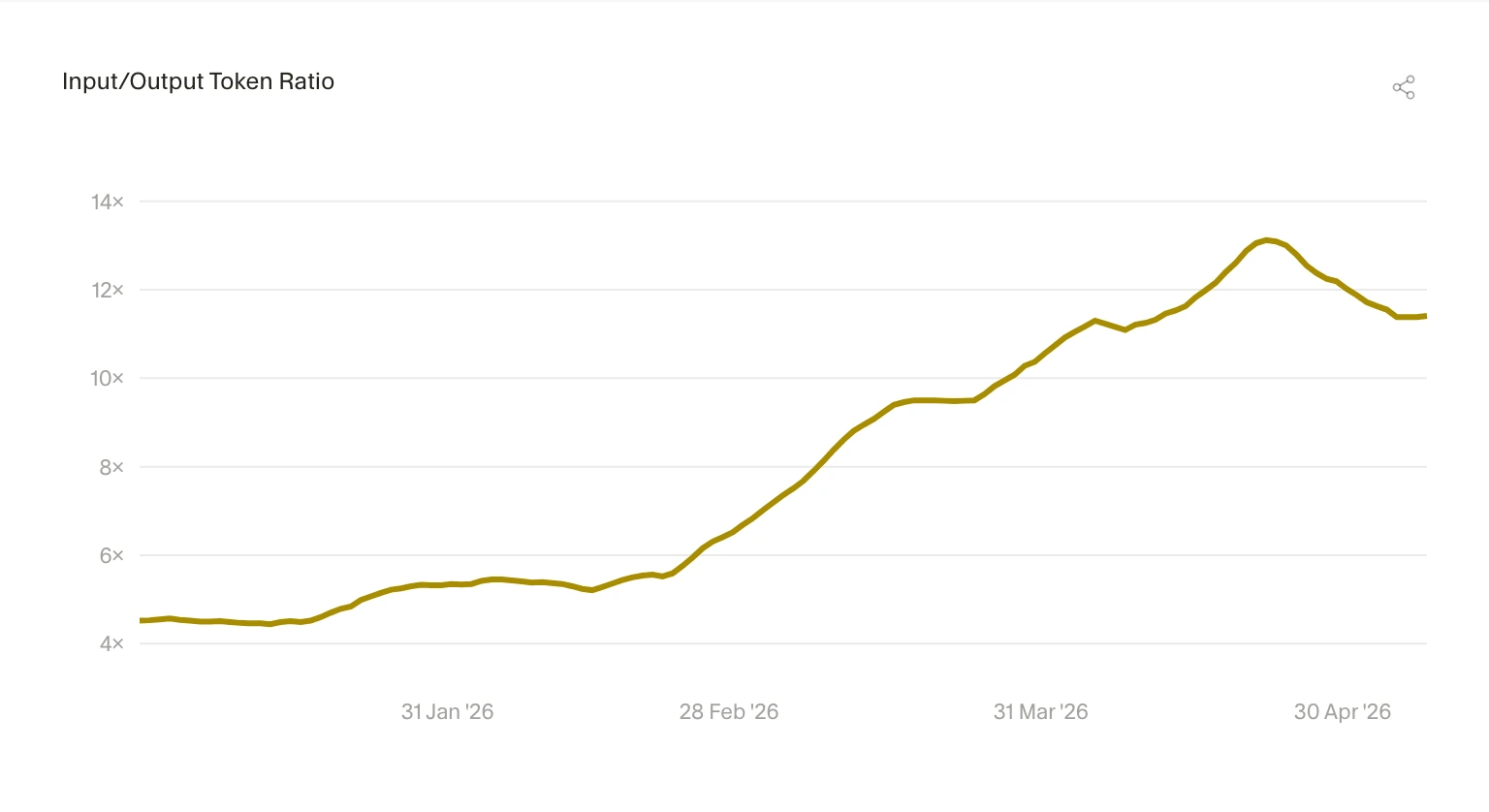
Source: The Cursor Developer Habits Report
Repo maps, search, cache behavior, tool calls, terminal output, and review surfaces may matter as much as the base model. Users do not experience “model quality” in the abstract. They notice whether the agent understood their codebase or confidently edited the wrong thing.
What the discussion is missing
Cursor’s data comes from real product usage, which makes it more useful than a survey. It is still Cursor’s own user base. Treat it as a strong signal, not an industry-wide average.
The missing comparison is downstream quality. Defect rates. Rollbacks. Review time. Test coverage. Maintenance cost after AI-assisted changes land. Lines added and PR size are easy to chart. Engineering health is where the bill shows up later.
The practical read
Engineering leaders should watch review systems alongside AI adoption. If agents make PRs larger, teams need sharper change descriptions, better test evidence, and a habit of splitting risky work before it becomes unreadable.
Individual developers should treat AI coding as a workflow skill. Ask for smaller changes. Provide the files that matter. Read the diff. Run the tests. Reject output quickly when it drifts. That sounds boring, but that is the difference between speed and cleanup.
For more AI and developer-tool coverage, see the AI & Technology archive.